Rising damp, and the test almost nobody runs
What rising damp actually is, why a moisture meter cannot confirm it, and the laboratory method the British Standard points to instead. Read this before you sign off a quote for a chemical damp-proof course.
By The Damp GuyLast updated
The short version
Rising damp is real. It is also the diagnosis most often reached without the test that would confirm it. BS 6576:2005+A1:2012 is blunt about the instrument nearly every survey uses: surface measurements cannot alone give proof of rising damp. Confirming it means going into the wall. BRE Digest 245 sets out how: a vertical series of drilled samples, with the hygroscopic and the capillary moisture content of each one measured. The meter used instead does not differentiate between hygroscopic and capillary moisture. So it tells you the wall is damp. It cannot tell you why. Why is the whole question, because four of the five things that make a wall damp at low level are not rising damp.
Water goes up, and it takes salt with it
The mechanism matters, because it leaves evidence behind long after the water has gone.
Capillary action is what pulls tea into a sugar cube: water climbing through fine pores, against gravity. In a wall, that moisture does not travel alone. It dissolves soluble salts out of the building materials, calcium sulphate among them, and carries them up.
Those salts are why the problem outlives its own cause. Hygroscopic salts pull moisture straight out of the air once relative humidity passes about 75%. So a wall that was once wet, and is now salted, reads damp, feels damp and behaves damp. Nothing is rising into it at all.
The visual evidence works the same way. Salt deposits and tide marks stay put long after the water that caused them has gone. A tide mark proves your wall was wet at some point in its life. It does not prove anything is wet today. A lot of unnecessary work gets sold in the gap between those two sentences.
What is at the bottom of a wall, in order of likelihood
Only the last two rows need a laboratory. Three of the five you can narrow down for nothing, by watching when the wall changes.
| Cause | How it behaves | What settles it |
|---|---|---|
| Ground and surface drainage | Described as the most common source of moisture at the base of a wall | Looking at ground levels, gutters and drainage first |
| Penetrating damp | Follows the weather; worse during and after rain | Watching whether it tracks the rain |
| Condensation | Warm moist air meeting a cold surface; worse in cold still weather | Watching whether it tracks the cold and the room in use |
| Hygroscopic salts | Reads damp with no active water source, above about 75% humidity | The BRE 245 samples: they separate hygroscopic from capillary moisture |
| Rising damp | Tracks neither the rain nor the cold | The BRE 245 sample, per BS 6576 |
Read down that table and the shape of the problem jumps out. Four of the five things that make a wall damp at low level are not rising damp. Three of them cost you nothing to narrow down. You just have to notice when the wall changes.
What to ask the person quoting
You are about to have a conversation you are not equipped for. Four questions is all it takes to change that.
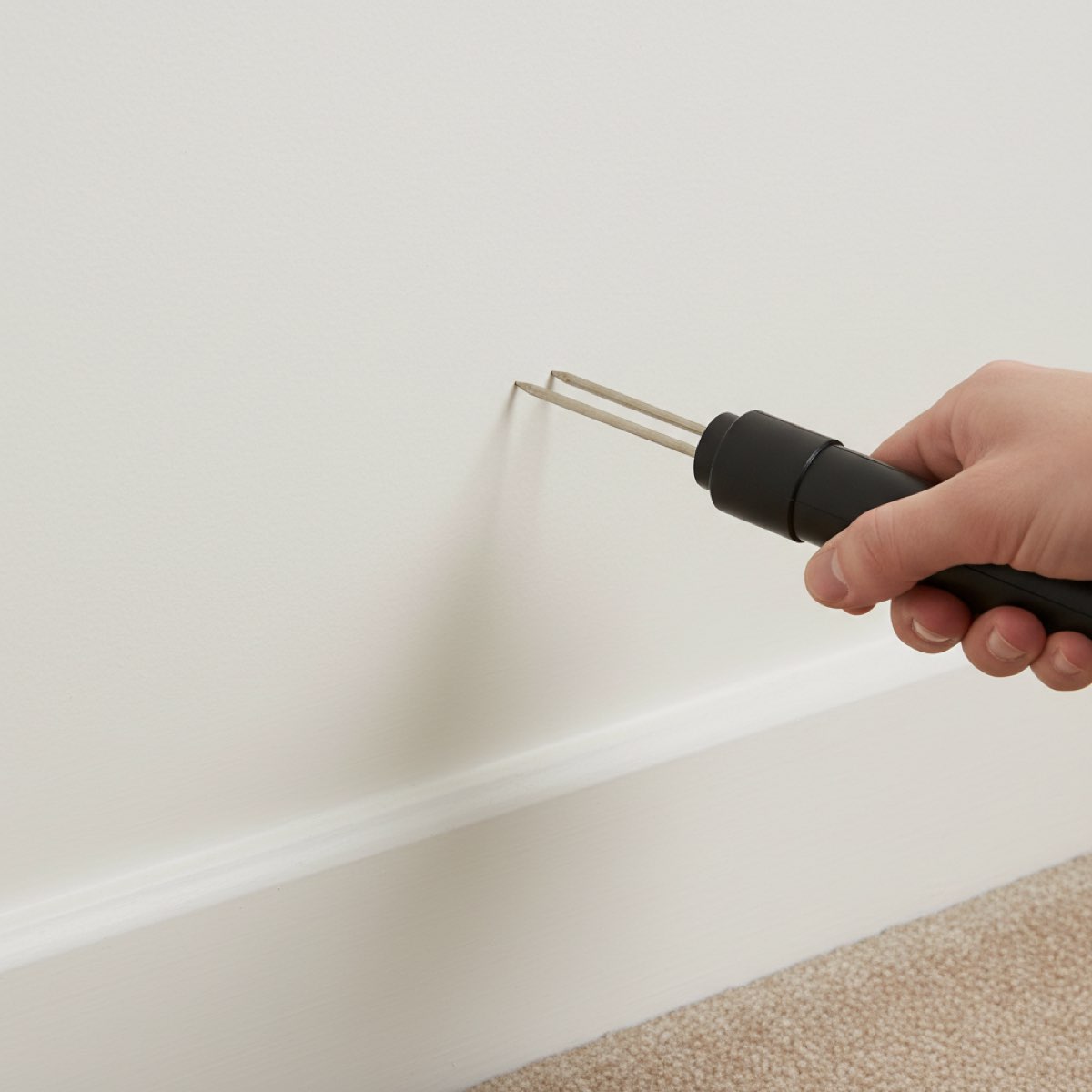
- Which test confirmed it? If the answer is a meter reading, that is a prompt to investigate. It is not proof of rising damp.
- Have samples been taken and analysed? BRE Digest 245 separates the hygroscopic and capillary moisture content of a vertical series of drilled samples. BS 6576 names gravimetric and chemical methods as the way to get evidence from inside the wall.
- What have you ruled out, and how? Ground levels, drainage, gutters and cavity defects are cheaper to check. They are also likelier to be the answer.
- Are you quoting for the work you diagnosed? That is not an accusation, just the shape of the trade. The company diagnosing is usually the company selling the cure. Wanting a second opinion from someone who is not is fair enough.
About this resource
The technical weight here is BRE Digest 245, titled "Rising damp in walls: diagnosis and treatment", and BS 6576:2005+A1:2012. Both quotes come from BSI's and BRE's own published wording. Both documents sit behind a paywall and I have not read either in full. Worth knowing when you weigh this page against a surveyor holding the actual text.
No costs here. No maximum height in millimetres. No figure for how often rising damp gets misdiagnosed, because no like-for-like published study supports one. And no judgement about any particular company: this is about incentives and instruments, not about anyone's honesty.
This site does not survey, treat or quote for work, and it cannot tell you what is happening in your wall. What it can do is stop you agreeing to a chemical damp-proof course on the strength of a reading that cannot establish you need one.
Common questions
What are the first signs of rising damp?
A tide mark on the wall a foot or two up, blown or crumbling plaster, salt deposits like a white bloom, and skirting that has gone soft. Every one of those is also a sign of something else. Salt deposits and tide marks stay put long after the water that made them has gone, so they tell you the wall was wet at some point. They do not tell you anything is wet now, and they cannot tell you which kind of moisture did it.
Can rising damp suddenly appear?
A wall that was fine for thirty years and is damp this winter has usually had something change outside it. Ground and surface drainage is described as the most common source of moisture at the base of a wall, so a raised border, new paving or a gutter that stopped draining is the first thing to look at. Salt is the other explanation. Hygroscopic salts pull moisture out of the air once humidity passes about 75%, so a wall salted years ago can start reading and feeling damp when nothing has risen into it at all.
How far up a wall does rising damp go?
You will see a metre quoted, or 1.2 metres, or a rule about the height capillary action can manage. No height figure appears on this page, because none was found in a source worth standing behind. It matters more than it sounds. A height rule is what lets someone look at a damp patch, call it rising damp and skip the test, and the height of a stain is not evidence of what put it there.
Can you live in a house with rising damp?
People do, for years. The wall is not about to fall down and nobody is telling you to move out. What does need dealing with is anything growing on the damp surface, and the honest guidance on that is the government's own, set out on the mould page. The reason to act is that the plaster keeps blowing, the smell comes back and the problem gets more expensive the longer it runs, not that the house is unsafe to be in tonight.
Can you treat rising damp without removing the plaster?
Rarely, and the reason is the salt. Moisture rising through a wall dissolves soluble salts out of the materials and carries them up into the plaster, and those salts keep drawing moisture from the air after the water has stopped. Leave the salted plaster on and the wall carries on reading damp, feeling damp and staining through paint, whatever went into the brickwork. That is why hacking off and re-plastering appears on quotes, and it is usually the larger half of the bill.
Is rising damp expensive to fix?
The injection is not the expensive part. The making-good is, and on the published guides it can be several times the cost of the treatment itself. The far more expensive outcome is paying for any of it when the diagnosis was wrong, because none of that money comes back. Read what the work costs and what a quote leaves out before you agree to anything.