Condensation, and why a dry wall still grows mould
The number that decides whether mould grows is not the dew point. It is not the reading on your hygrometer either. What condensation is, the humidity to aim at, and how to tell it apart from the two kinds of damp people pay to have treated.
By The Damp GuyLast updated
The short version
Mould needs a humid surface, not a wet one. BS EN ISO 13788 uses a critical surface relative humidity of 80%, and many mould spores germinate once surface humidity passes it. A surface can pass it while still being warmer than the dew point. So your wall feels dry and grows mould anyway. That is the point most people decide they must have real damp, and go looking for a damp company. Aim for 40 to 60% relative humidity in the room, the range UK professional and health guidance settles on. Keep the air humid for long enough and your cold surfaces cross that 80% line.
Room humidity is not surface humidity
This is the gap that makes your hygrometer reading reassuring and wrong.
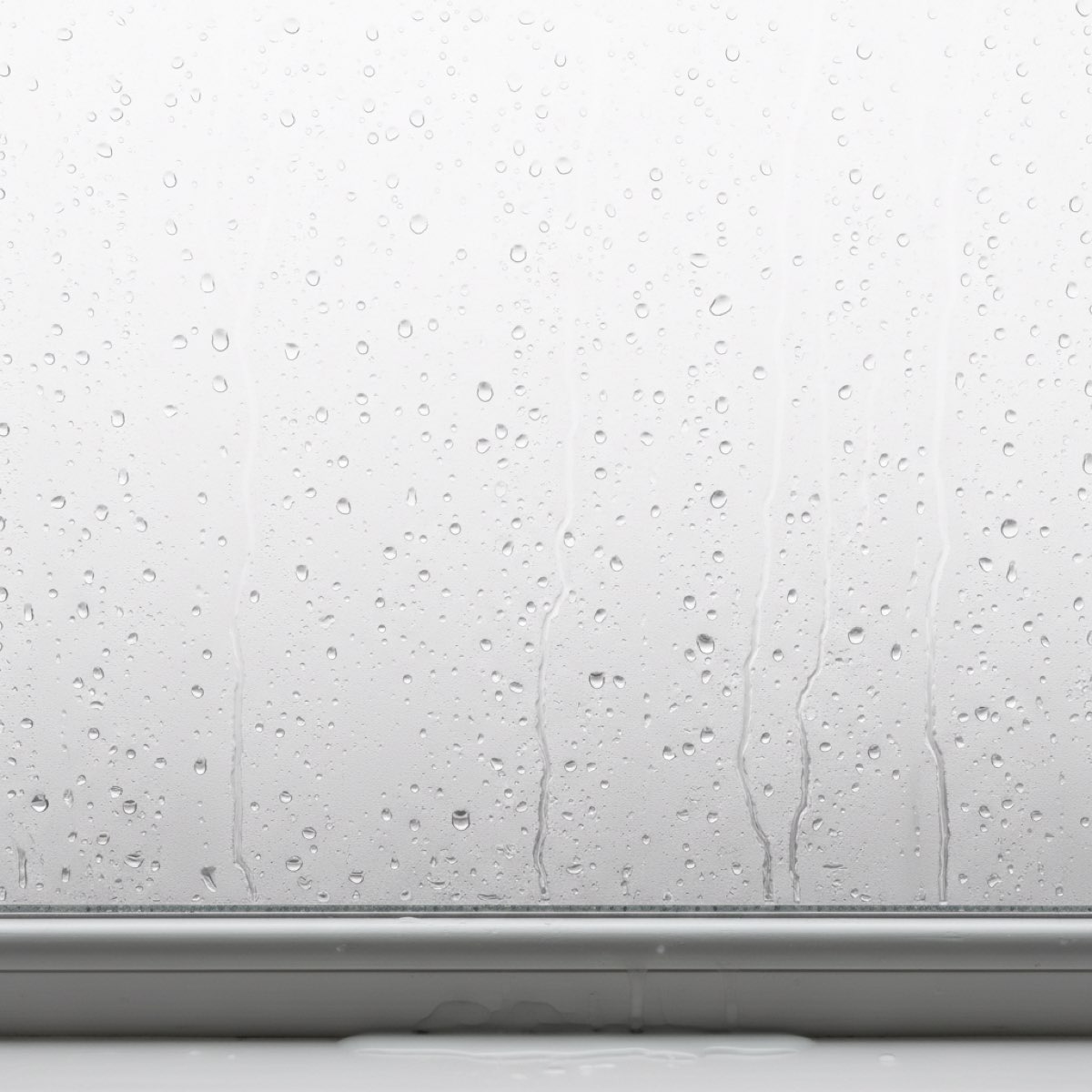
A cheap hygrometer sits in the middle of the room and reads the air around it. Mould grows on the coldest surface in that room. The humidity there runs higher, because the air touching it is colder.
The link is real, but it is not a fixed number. Under the BS EN ISO 13788 method, sustained high indoor humidity drives a cold, poorly insulated external wall into the mould-risk band. How fast depends on how cold that surface runs against the room. So your room can read in the seventies and feel unremarkable while the outside wall behind the wardrobe is already over the line. A better-insulated wall in the same room is not.
The number to aim at is lower than most people expect. UK professional and public-health guidance lands on roughly 40 to 60% relative humidity. CIBSE says about 40 to 60%. The World Health Organization sits around the same. The HSE allows up to 70% as acceptable. Now you have something to measure against, instead of a vague instruction to open a window.
Watch when it changes, not what it looks like
Appearance is the least reliable signal you have. All three can put the same dark patch on the same wall.
| Kind | When it gets worse | What it is |
|---|---|---|
| Condensation | Cold still weather, windows shut, room in use | Moist air meeting a cold surface |
| Penetrating damp | During and after rain | Water crossing the structure through a defect |
| Rising damp | Neither, in particular | Moisture moving up by capillary action |
Timing beats appearance, and it costs you nothing. A fortnight of paying attention, not a survey.
What actually shifts it
Nobody wants a lecture on vapour. You want the black spots round the window gone by spring.
Three things decide whether they go: how much moisture goes into the air, how much of it leaves, and how cold the surfaces are that it can land on. So you have three levers. Which one moves your problem depends on your house, not on a general rule.
- Make less of it. Drying washing indoors, cooking uncovered and long showers all pump water into the air of a sealed house.
- Take it out where you make it. Extracting at the source beats spreading it through the whole house and diluting it later. Ventilation in dwellings is covered by Approved Document F. Moisture more broadly sits in Approved Document C.
- Warm the cold surfaces. The mould picked the coldest spot for a reason. Warm that surface and the humidity at it drops, and that is the number deciding whether anything grows.
About this resource
The thresholds here come from published standards. BS 5250:2011 was the code of practice for the control of condensation in buildings. BS 5250:2021 has superseded it, retitled "Management of moisture in buildings". The 80% surface criterion is from BS EN ISO 13788, which puts the risk of mould growth at monthly mean surface humidities above a critical value taken as 0.8. The 40 to 60% range is guidance from CIBSE, the WHO and the HSE, not anything in BS 5250. That distinction is worth making, because plenty of pages quote it as though it came from the standard.
No ventilation rates in litres per second, and no costs. Health is a medical question this site cannot answer, so the mould page reports what the government's own guidance says about damp, mould and health rather than judging it here.
This site does not survey, treat or quote for work, and it cannot tell you what is happening in your wall. If your pattern tracks neither the cold nor the rain, that is the point to get an inspection from someone with no interest in selling you the treatment.
Common questions
Does opening the windows reduce damp?
It moves one of the three levers, and only one. Opening a window takes moist air out, which lowers the humidity in the room. It does nothing about how much moisture you put into the air, and nothing about how cold your coldest surfaces are. It also does nothing at all if your damp tracks the rain rather than the cold, because then the water is arriving through the wall and no amount of fresh air stops that.
Does having the heating on help with damp and mould?
Yes, by the surface route rather than the air one. Warming a cold wall raises its temperature, and the humidity at that surface falls as a result. The threshold that decides whether mould grows is a surface relative humidity of 80%, so a warmer wall sits further below the line. What heating cannot do is out-run moisture. Heat a sealed house that has washing drying in it and you can end up back where you started.
Why are my new windows running with condensation every morning?
New glazing usually makes a house tighter, so less air leaks out overnight and the moisture from cooking, washing and breathing stays in. The room humidity rises. If the glass itself is still the coldest surface in the room you see it on the glass. If the new units are warmer than the walls, the water goes to the walls instead, and that version is worse because it lands somewhere you cannot wipe. Aim for 40 to 60% relative humidity in the room and the problem moves either way.
Will condensation clear up on its own?
The water will. The conditions will not. A window dries off by lunchtime and the wall behind the wardrobe dries a little in a warm spell, then both go back to doing the same thing the next cold night, because nothing about the room has changed. Mould does not need a wet surface to keep going either. It needs a humid one, which is why walls grow it without ever visibly running.
Do dehumidifiers get rid of damp?
A dehumidifier pulls moisture out of the air, so it works on the same lever as opening a window, and it does it without letting the heat out. That is genuinely useful for a condensation problem. It does not warm the cold surface the mould picked, and it does nothing whatever for water crossing the wall from outside. No unit is recommended on this website, because nothing here earns a commission and no meaningful testing has been done.
Does condensation mean my house is too cold?
Not on its own. Condensation is about the gap between how humid the air is and how cold the surfaces are, so it turns up in warm humid houses with one cold wall as readily as in cold ones. The useful number is the humidity, not the thermostat. UK professional and public-health guidance settles on roughly 40 to 60% relative humidity, with the HSE allowing up to 70%. Measure that first, then decide whether the answer is heat, ventilation or insulation.